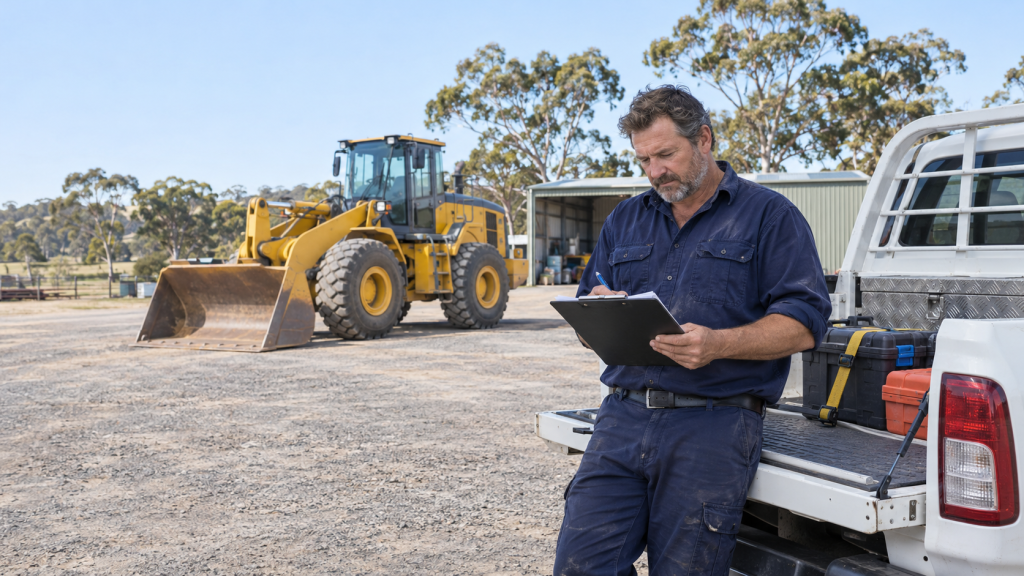
A machine can be on site and earning revenue for several weeks before the first customer payment reaches your account.
During that time, wages and fuel still need to be paid. Delivery and mobilisation may have already drawn on your cash reserves.
Planning equipment finance and working capital together helps you assess whether the business can comfortably support the purchase through that period.
The cash needed to get equipment working belongs in the purchase budget.
Look beyond the supplier’s invoice
Whether you’re buying new or used equipment, work through the expenses that will arise before it begins generating customer receipts.
| Cost to allow for |
What to check |
| Delivery and mobilisation |
Transport charges, site access and moving the equipment into position. |
| Setup and preparation |
Installation, commissioning, attachments or repairs needed before use. |
| Staffing |
Operator wages, training and any additional labour required. |
| Running costs |
Fuel, materials, stock, insurance and scheduled maintenance. |
Ask your broker which associated costs can be included in the proposed equipment finance. This helps establish what will need to come from available cash or another funding source.
For a replacement purchase, also check the timing of any trade-in or sale proceeds. You may need to pay for the replacement before receiving money from the old asset.
Forecast the gap between doing the work and getting paid
A job’s margin doesn’t show you when the money will be available.
Your business might pay wages weekly, buy materials upfront and invoice only after a milestone has been approved. The equipment repayment could also fall due before the customer pays.
Put those dates into your cashflow forecast alongside existing business expenses. Include a reasonable allowance for delayed starts, unexpected repairs or slower customer payments.
Check the lowest forecast cash balance, rather than relying on the month-end total.
That point in the forecast can help identify how much working capital you need and when it must be available.
Include current tax and super commitments
Payday Super and changes to ATO interest deductibility also belong in this assessment.
Since 1 July 2026, super contributions generally need to reach employees’ super funds within seven business days after payday, with exceptions in certain circumstances. For employers who previously paid quarterly, this brings the cash outflow closer to each wage payment.
Separately, ATO general interest charge (GIC) and shortfall interest charge (SIC) incurred on or after 1 July 2025 are no longer deductible. This affects the after-tax cost of those charges, rather than changing the amount of interest billed.
If you have ATO debt, include the agreed payments and interest in your forecast. Ask your accountant to confirm how the tax and super rules apply to your circumstances before committing cash to a purchase.
Decide whether additional working capital is needed
Your forecast may show that existing reserves are enough. Customer deposits, progress payments or negotiated supplier terms may also reduce the gap.
Where additional finance is appropriate, options can include an overdraft, line of credit, business loan or invoice finance. Each has different costs and conditions.
Consider how the facility will be repaid and assess that commitment alongside the equipment loan. A temporary wait for an invoice payment is different from an ongoing shortfall between operating expenses and income.
Before proceeding, understand the interest, fees and any security requirements, including how the arrangement may affect existing facilities.
Bring the operating costs into your MKP discussion
When you send your equipment quote to your MKP broker, include the expected delivery date and any expenses needed to get it working. Explain when you expect to invoice for the work and receive payment.
MKP can help you explore equipment finance alongside your working capital requirements, taking your existing commitments into account.
Contact the MKP team to discuss a planned purchase. The conversation is at no cost and with no obligation.
For a broader review of your funding arrangements, explore our funding strategy approach.
Contact Us
General information only. Speak with your accountant about your tax and super obligations. Finance is subject to lender assessment and applicable terms.
Australian Taxation Office
business.gov.au